Description
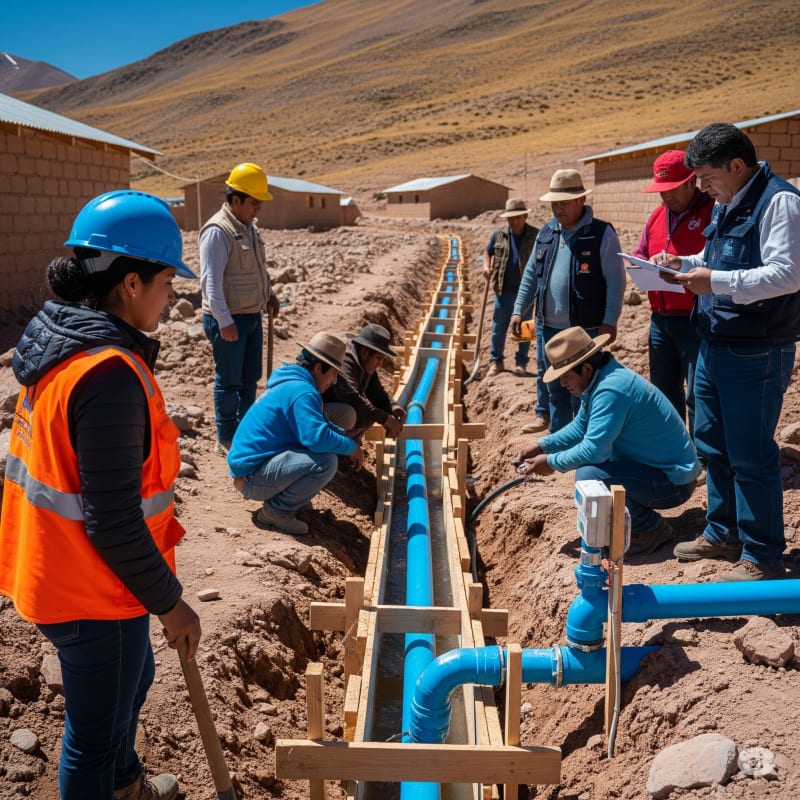
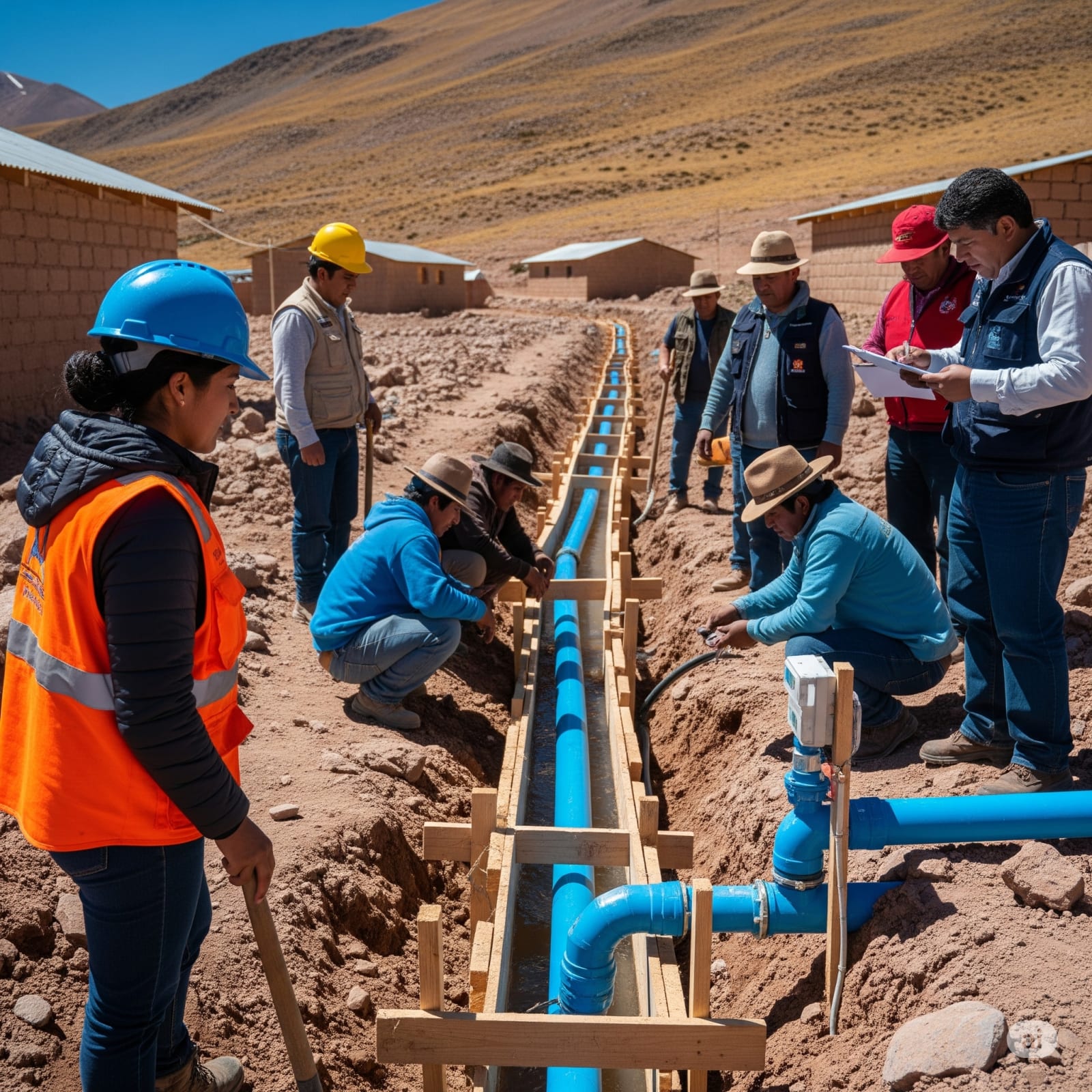
The project focused on technical supervision and the implementation of community development and institutional strengthening for the INPANDES AGUA Project. The goal was to ensure the execution and sustainability of water and sanitation systems in the Bolivian highlands, promoting water resilience and self-management. 1. Technical Construction Supervision The construction of drinking water systems was supervised in three municipalities: Huarina, Huatajata, and Chua Cocani, in the La Paz department, ensuring engineering standards. This included: Design Audit: Review of hydraulic designs (calculations, pressures, velocities), structural (catchments, tanks), and electromechanical (pumping, solar) in accordance with NB 689, NB 512. Quality Control on Site: Inspection and testing of materials (PVC/HDPE, concrete) and construction processes (excavations, compaction, pipe installation, concreting, electromechanical assembly). Performance Monitoring: Follow-up on commissioning, supplied flow rate, water quality, and service continuity. 2. Community Development Focused on training and awareness-raising for beneficiaries to ensure appropriation and sustainability: Technical Training: Training for CAPS/APS on operation and maintenance of systems (leak detection, chlorine dosing). Financial Management: Workshops on tariff collection, budgeting, and fund management. Sanitary Education: Promotion of hygiene practices and efficient water use. 3. Creation of Management Units and Institutional Strengthening Oriented towards operational and administrative sustainability through the transfer of local capacities: Institutional Technical Assistance: Support to municipalities and organizations in local regulations and management plans. Organizational Structuring: Advice on the formation and legalization of CAPS, promoting participatory and equitable governance. Inter-Institutional Articulation: Encouragement of coordination between communities, municipalities, and regulatory entities (AAPS).
Gallery