Description
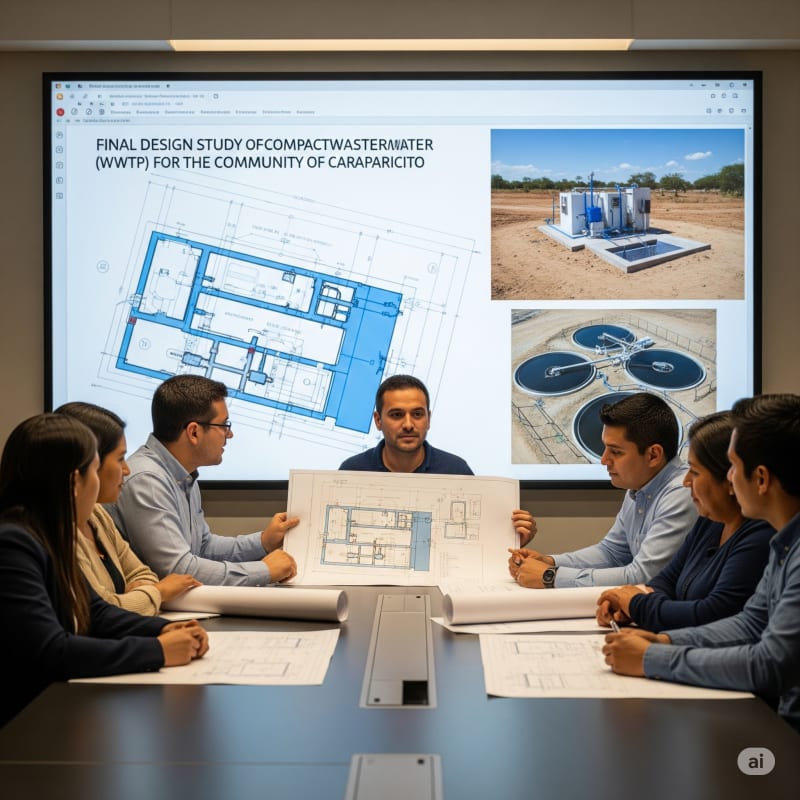
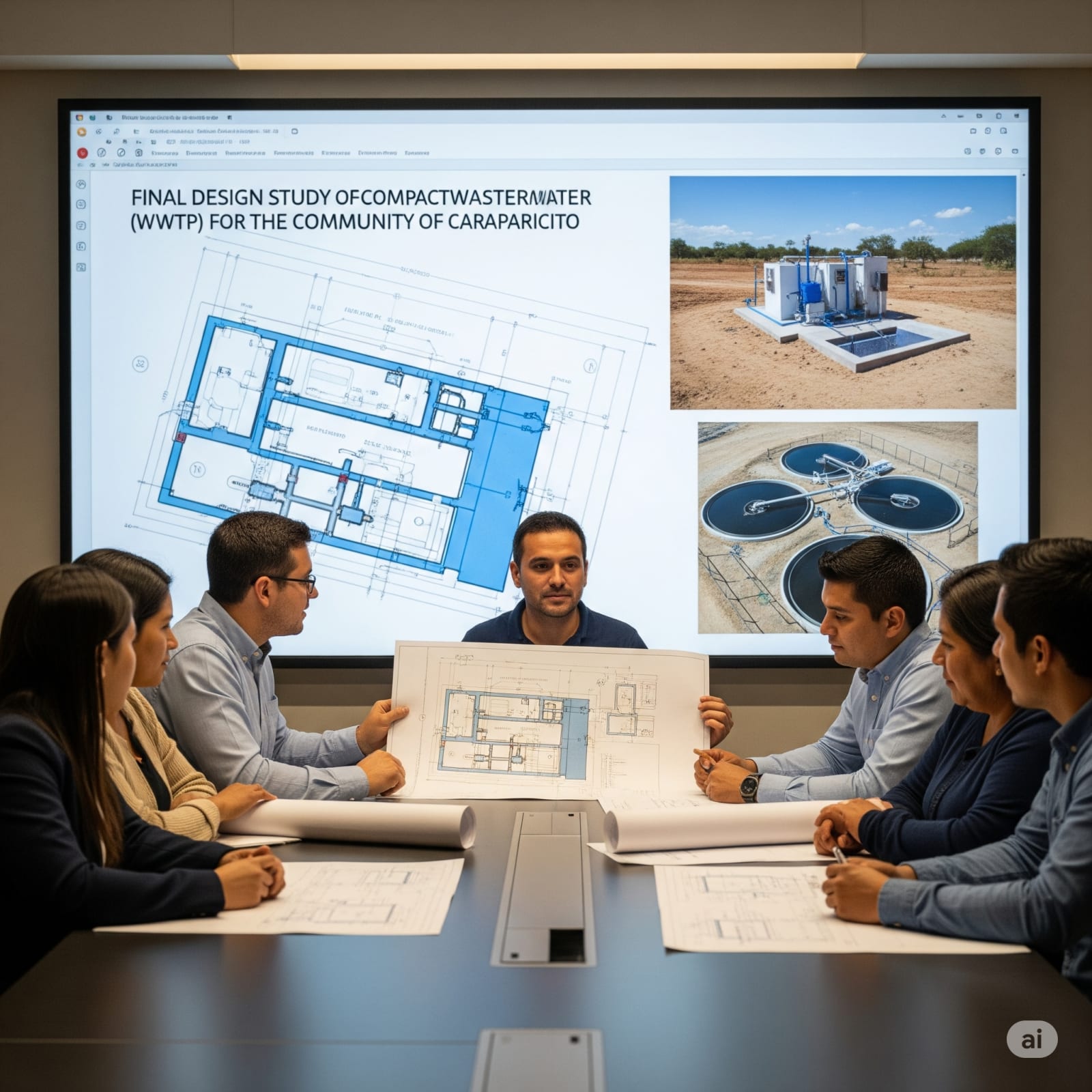
The "Final Design Study for the Wastewater Treatment Plant (WWTP), Caraparicito Community" project represents a crucial advance for the community, as it proposes a comprehensive solution for managing its wastewater. This final study details the design of a Wastewater Treatment Plant (WWTP), with the primary objective of improving public health and protecting the environment in Caraparicito. The designed WWTP will have a treatment capacity of 200 cubic meters per day (m³/day), making it suitable to meet the community's needs. The technology selected for this plant is conventional, which implies a series of proven and efficient processes: Physical processes: Include the removal of large and coarse solids, such as grates and grit chambers. Chemical processes: Are used to precipitate dissolved contaminants and improve the flocculation of small particles. Biological processes: Employ microorganisms to degrade the organic matter present in the wastewater, transforming it into less harmful components. The combination of these processes ensures that the treated water meets the necessary quality standards for safe discharge or, in the future, for potential reuse. Beyond the technical aspects, this project stands out for its focus on community participation and social development. Socialization workshops were held to inform Caraparicito's inhabitants about the project, resolve their doubts, and foster their commitment to the future operation and maintenance of the plant. Similarly, a Community Development (DESCOM) component was integrated. This component is fundamental to ensuring the project's long-term sustainability, promoting local ownership, training in operation and maintenance, and raising awareness about the importance of sanitation for health and community well-being. In short, this final design study for the Caraparicito WWTP not only addresses an essential infrastructure need but also promotes a development model that prioritizes health, the environment, and active community participation.
Gallery