
Description
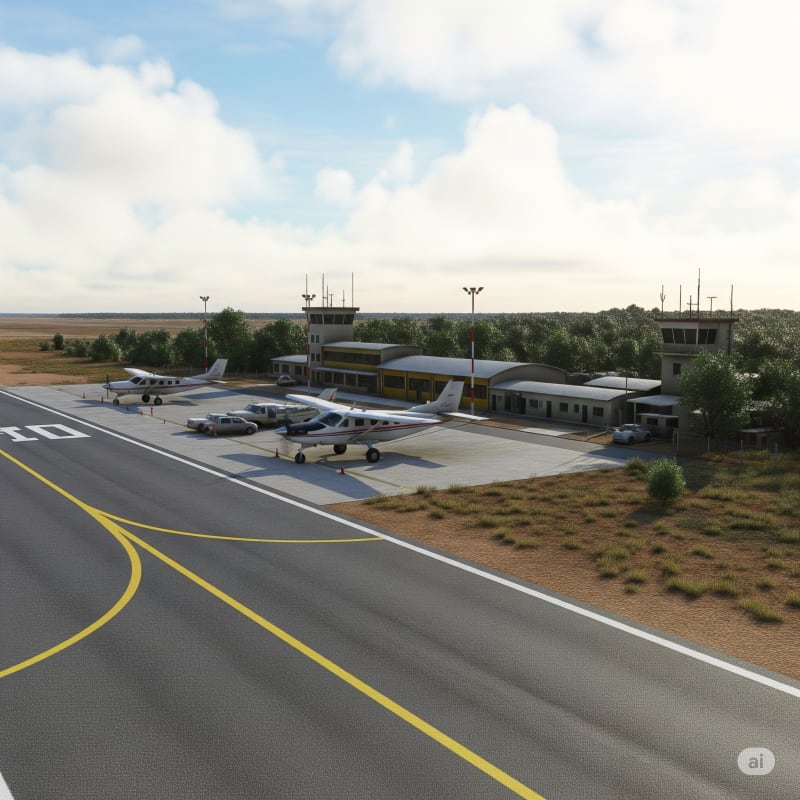
This project consisted of the Identification Study (EI) and Technical, Economic, Social, and Environmental Study (TESA) for the future construction and modernization of Camiri Airport. The objective is to transform the air connectivity of the oil and livestock region of the Bolivian Chaco. Conceptual Technical Design of the Airport The preliminary design considered the expansion of aeronautical infrastructure to support more robust operations, adapted to the climatic and geographical conditions of the Chaco. The key components of the design included: Runway (RWY): Evaluation of an optimal runway of 2,200 meters, considering reference aircraft and the elevation of Camiri (798 m above sea level). The rigid pavement and geotechnical studies were defined. Aircraft Parking Platform: Design to accommodate multiple aircraft simultaneously, including general aviation and potential larger aircraft. Taxiway: Planning for efficient circulation between the runway and platform, optimizing safety. Passenger Terminal: Architectural and functional design with check-in areas, waiting rooms, security, customs, and baggage claim. Control Tower (TWR): Proposal for location and design for optimal visibility, equipped with air communication and navigation systems. Aids to Air Navigation (NAVAIDs): Evaluation of visual and non-visual systems (VOR, NDB, ILS) for safe operations under various weather conditions. Fire Rescue and Firefighting Service Building (SSEI / Firefighters): Strategic design for equipment and personnel, ensuring optimal response times. Air Cargo Terminal: Planning of a building dedicated to cargo handling, with storage, inspection, and dispatch areas. Support and Service Areas: Planning of hangars, warehouses, fuel depots, parking, and access roads, among others. Comprehensive Impact Analysis A multidimensional analysis was carried out to evaluate viability and sustainability: Air Demand Projection Environmental Impact Study (EIA) Economic and Social Viability Analysis Sustainable Development Model The study promoted a sustainable development model, balancing regional economic drive with environmental protection. Solutions were designed to adapt to the extreme climatic conditions of the Chaco to ensure resilience and long-term operation. This project is projected as a catalyst for 15% regional economic growth, strengthening the logistical and commercial infrastructure of Camiri.
Gallery