
Description
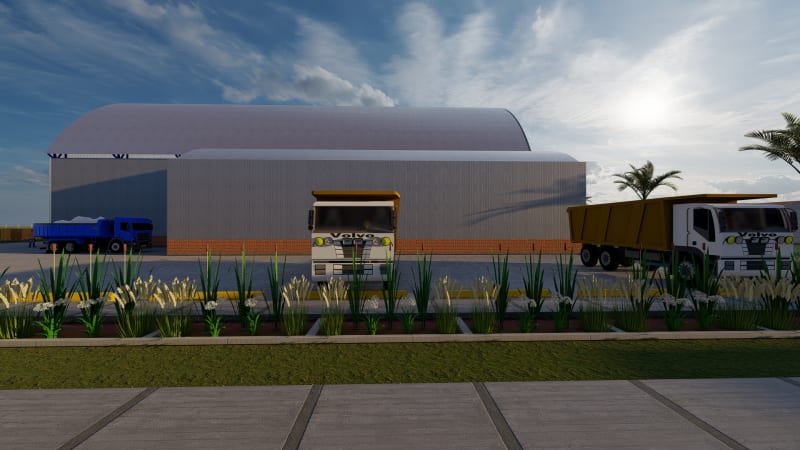
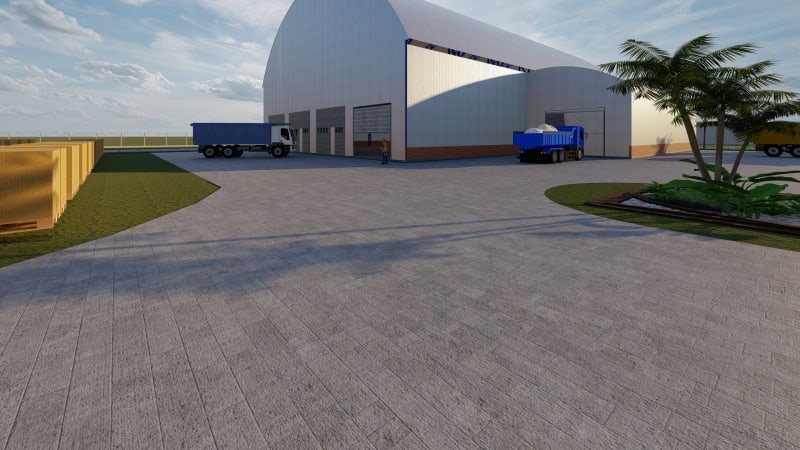
This study, framed in the National Program to Support Cotton Production in Bolivia, establishes the technical, economic, and environmental viability for the implementation of a modern cotton ginning plant in the Municipality of Pailón, Department of Santa Cruz. The project has as its general objective the implementation of a Cotton Ginning Plant and a fiber quality analysis laboratory by HVI system. Design Capacity and Characteristics of the Ginning Plant: The plant is designed to process mainly medium to long staple cotton (Gossypium hirsutum), the predominant type in the Santa Cruz region. Processing Capacity: The nominal processing capacity is 12 bales/hour (considering bales of 227 kg or 500 lbs), projecting an annual production of 15,000 bales in a period of operation of approximately 5 months. Ginning Technology: It will incorporate high-efficiency saw ginning banks, specifically models such as Imperial III (170 saws / 96" wide or 116 saws / 66" wide), optimized to minimize fiber breakage and improve the quality of ginned cotton. A fiber yield (Gin Turnout) of approximately 38% to 42% of the weight of seed cotton is projected. Integrated Process Systems: Reception and Discharge: Includes weighing equipment and telescopic suction systems. For cotton modules, Module Feeders (mobile or fixed head) and Automatic Suction Control are considered. Drying and Pre-cleaning: A multi-stage cleaning system will be implemented, including gas-fired hot air burners, drying towers, inclined hot air cleaners, and extractor-type cleaners for impurity removal. Humidity control will ensure an optimal content (6.5% to 8.5%) of seed cotton. Distribution and Overload: Distributor screw and Automatic Overload Hopper for continuous and uniform feeding to the feeders. Feeding and Ginning: Feeder-extractor sets and saw ginning banks. Fiber Cleaning: Post-ginning systems such as fiber cleaners, carders (single or double) or saw/card cleaners. Condensation and Humidity Restoration: Fiber Circulation Channel with Standard Condenser or Humidity Restoration Condenser (MC) to replenish humidity in the fiber. Pressing and Bale Handling: High-density hydraulic presses (e.g., 28 lb./cu. ft. - U.D. or 32 lb./cu. ft. - HiD) for the formation of bales of 20" x 54" x 28" or 20" x 41" x 28". Includes systems for transportation and accumulation of bales. By-product Management: Efficient collection and handling of cotton seed (approximately 55% to 60% of the weight of seed cotton) and other by-products. Automation and Energy Efficiency: The plant will be equipped with centralized control systems (SCADA/DCS) for monitoring and automatic operation, optimizing efficiency. High-efficiency electric motors (IE3 or IE4) and heat recovery systems will be used to minimize energy consumption, estimated at 200 to 300 kWh per bale of ginned cotton. HVI Cotton Classification Laboratory: A laboratory equipped with the High Volume Instrument (HVI) for precise classification of ginned cotton, evaluating properties such as length, strength, uniformity, micronaire, waste, and color. Infrastructure and Logistics: Specific areas for reception, discharge, weighing, labeling, bale handling, storage of finished product, loading, and transportation. Includes spaces for administrative offices, personnel residence, and gate/control. Detailed Engineering: The final design includes architectural engineering (topographic plans, location plans, replanting plans, plants, sections, facades, roofs, constructive details, signage), structural engineering (foundations, structural elements with seismic considerations, tanks, containment walls, roofing), hydrosanitary engineering (water sources, potable water networks, machinery, fire protection, sanitary and storm drainage, waste treatment) and electrical engineering (transformer bank, power supplies, panels, circuits, auxiliary systems, emergency lighting). All technical documentation complies with Ministerial Resolution No. 115. The Final Design Study is a comprehensive technical document that provides the basis for the construction and operation of the Cotton Ginning Plant, ensuring compliance with regulations and quality standards.
Gallery