
Description
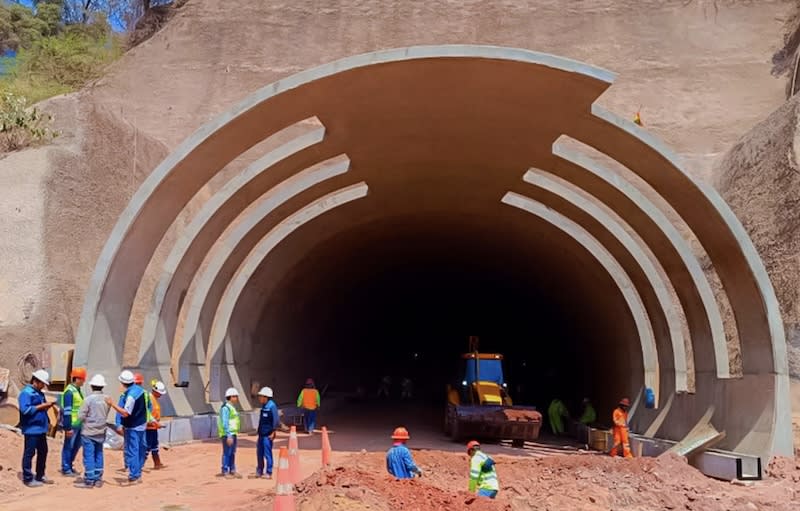
The project consisted of the Review, Update and Validation of the Final Design Study of the Incahuasi Tunnel and its accesses, with the objective of ensuring the technical, economic and environmental viability of its execution. The projected tunnel has an approximate length of 1,260 meters, and its design is aligned with international standards for transportation infrastructure in areas of high complexity. The tunnel's cross-section was designed to ensure optimal safety and operating conditions, considering a total platform width of 10.00 meters, consisting of two 3.50-meter lanes, a 2.00-meter central median, two 0.50-meter lateral shoulders, and 0.80-meter emergency strips on each side. The projected free height is 5.00 meters, incorporating a 0.10-meter revancha for recap, which will allow for future interventions without affecting the tunnel's operational gauge. Complementarily, the design of the stormwater drainage works for the tunnel was developed, with the aim of mitigating the accumulation of surface and groundwater within the structure. A Wastewater Treatment Plant was also designed to treat contaminated water generated by activities within the tunnel and vehicle runoff, in addition to the design of a false tunnel that will allow for structural and functional transition between the portals and the natural terrain. These technical components respond to criteria of sustainability and hydraulic efficiency. Within the framework of environmental and social management of the project, the Loss Replacement Program (PRP) was executed for the release of the right-of-way, ensuring a harmonious intervention with local communities and the environment. Similarly, the Environmental Impact Assessment Study (EEIA) was developed in accordance with current regulations, and the budget, unit prices, labor, and machinery were updated, considering the current economic context and the specific conditions of the intervention area. Finally, as part of the project's comprehensive approach, an inventory was made of the existing road that crosses the hill where the tunnel will be built, allowing for the identification of sections that require maintenance and rehabilitation. This action aims to ensure continuous connectivity during and after the execution of the tunnel, optimizing transportation times and costs in the region.
Gallery